








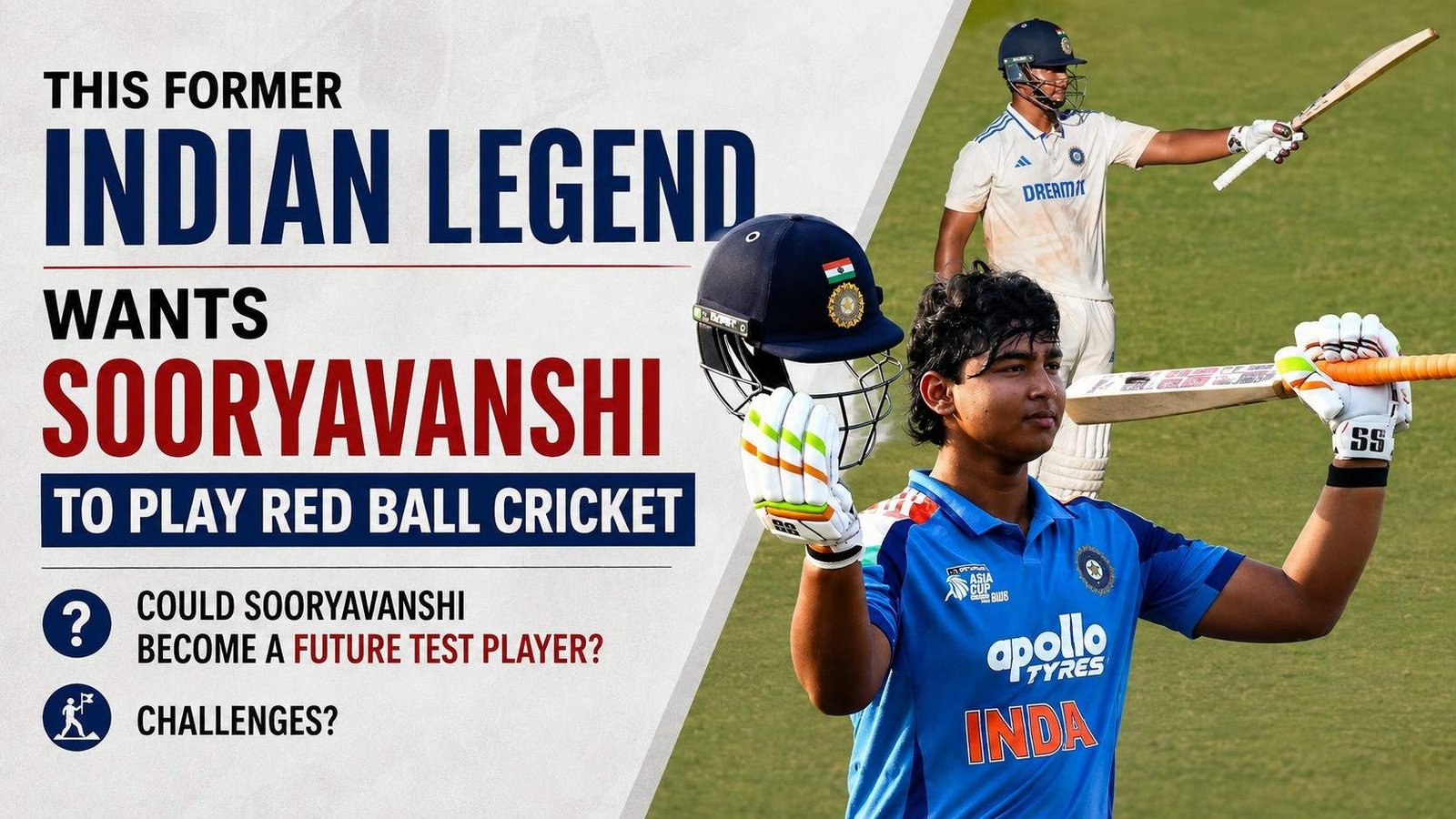
At just 15, Vaibhav Sooryavanshi has already made a big impact in white-ball cricket, but Rahul Dravid believes his journey should go beyond T20s and limited-overs cricket. The former India captain feels players like Sooryavanshi need to develop in all formats if Test Cricket is to stay strong. As per the ESPNcricinfo report, Dravid has supported the teenager in using domestic red-ball cricket as an important part of his development.
Dravid wants Vaibhav Sooryavanshi to find the right balance
Sooryavanshi’s rise has mainly come from his white-ball performances, including his breakthrough IPL season and later international exposure. However, Dravid believes this success should not stop him from building the skills needed for Test cricket. He stressed that the teenager needs experience in both formats while continuing to improve his red-ball game in domestic cricket.
“I think you always have to find that balance. And I think it’s a great thing that Vaibhav is getting the experience of playing some white-ball cricket through the IPL in India, but he’s also having the time to go back and play red-ball cricket in the Indian domestic system and grow his red-ball career”, Rahul Dravid told Cricinfo.
That balance is even more important because Sooryavanshi has played far more white-ball cricket than first-class cricket. His attacking style has already made him a strong player in shorter formats, but regular red-ball cricket can improve his patience, defence and ability to play long innings. For Dravid, his development could also impact the future of Test cricket.
“All of us also want to see Test cricket survive, all of us want to see Test cricket grow, and we need players like him to be able to hopefully play all formats of the game.”
The statement shows why Dravid values Sooryavanshi’s red-ball growth. If he succeeds in Tests too, it can keep all formats connected instead of making young players specialise too early.
Why is red-ball cricket a different challenge?
Moving from white-ball cricket to red-ball cricket is not only about playing for a longer time. The demands on a batter are very different.
In T20 cricket, a batter may have only a few overs to make an impact. In Test cricket, there can be long periods when the best option is to leave the ball, defend well and wait for a chance. A batter must stay focused while adjusting to the bowler, pitch and match situation.
Conditions can also change a lot. A Test batter may face movement in the morning, a flatter pitch later in the day and more help for spin as the match goes on. The opposition can use different fields and bowling plans, forcing the batter to change his approach.
For Sooryavanshi, the challenge will be to keep his natural aggression while learning when to use it.
His temperament will also be tested. White-ball cricket rewards quick attacking play, while red-ball cricket rewards patience and mental strength.
That is why Dravid believes Sooryavanshi needs time instead of quick judgment.
“The good thing is he’s going to take some time, he’s going to need some experience, he’s going to get an opportunity to play a lot of red-ball cricket. He’s not played as much red-ball cricket as probably white-ball cricket.”
The key word in that assessment is experience. Sooryavanshi does not need to change his game overnight. He needs regular first-class cricket so that the technical and mental changes slowly become natural.
ALSO READ: Mitchell Starc and The Art of Taking First-Over Wickets
His first-class numbers need context
Sooryavanshi has played only eight first-class matches so far and averages 17.25. These numbers look modest, especially compared with the impact he has already made in white-ball cricket.
However, his red-ball career has lacked regularity. He played these matches while also trying to make his place in India’s Under-19 setup. So, he has not played a long and regular run of first-class matches.
That makes the upcoming Duleep Trophy 2026 important. A long red-ball spell could help him fix technical issues, understand his game and learn from failures without pressure to score big immediately.
And Dravid has already said that such failures will be part of the process.
“I think he’s going to have some success but he also might have periods where it probably doesn’t work out well for him. But let’s all remember he’s only 15 and he has a long way to go.”
This view matters because Sooryavanshi is getting huge attention. His age makes his success special, but he will naturally face setbacks while playing different formats.
Duleep Trophy could provide the continuity he needs
The Duleep Trophy 2026 gives Sooryavanshi a good chance to spend more time playing red-ball cricket. He has been picked as vice-captain of East Zone, with Ishan Kishan as the captain.
East Zone’s squad has a good mix of young and experienced players.
The full East Zone squad is:
- Ishan Kishan (captain)
- Vaibhav Sooryavanshi (vice-captain)
- Abhimanyu Easwaran
- Kumar Kushagra
- Subhranshu Senapati
- Virat Singh
- Anukul Roy
- Shahbaz Ahmed
- Mohammed Shami
- Mukesh Kumar
- Denish Das
- Sudip Kumar Gharami
- Suraj Jaiswal
- Shikhar Mohan
- Abhijit Sarkar
You can see the full squads and schedule of all teams in the Duleep Trophy 2026 HERE.
ALSO READ: India vs Sri Lanka 2nd Test Preview: Colombo Test Puts Series, WTC Points on the Line
East Zone will start its campaign against North East Zone from August 23 to 26 at COE2, Bengaluru.
The experience could be very useful for the 15-year-old because he will play with experienced domestic and international players. Playing with senior cricketers can teach him things that shorter-format cricket cannot always teach.
Dravid is asking for patience, not putting a ceiling on him
The excitement around Sooryavanshi is easy to understand. His white-ball performances show his confidence and natural batting talent.
As per the ICC report, 2026 has been a breakthrough year for him. He played a key role in India’s Under-19 World Cup win, scoring 175 in the final, before making a big impact in the IPL. He then performed well in List-A cricket and made his international debut before a strong series in Zimbabwe.
These performances show he can handle big jumps in level. However, red-ball cricket brings new challenges, and Dravid wants him to have time to learn without extra pressure.
“He’s not played as much red-ball cricket as probably white-ball cricket. He’s only 15 and I think you’ve got to just give him some time and you’ve got to be patient with him. He’s obviously been such a success straightaway, right, but he’s going to go through his ups and downs and I think people are going to have to be patient with him.”
This is perhaps the best approach for a player who is still only 15. The next few seasons should be about building a strong base instead of rushing towards a Test debut.
Could Vaibhav Sooryavanshi become a future Test player?
The possibility makes his red-ball development very interesting. If Vaibhav Sooryavanshi can mix his fearless white-ball batting with the patience and discipline needed in first-class cricket, he could become the all-format player Dravid is talking about.
Many questions will come along the way. Can he leave the ball well? Can he handle tough bowling spells? Can he turn starts into big hundreds? Can he adjust to difficult pitches? Most importantly, can he stay focused during a five-day match? These answers need years of experience.
Dravid, however, believes the possible result could be exciting not only for Indian cricket but also for the wider game.
“So Vaibhav Sooryavanshi, by not playing in T20 competitions all over the world, is actually playing in the red-ball Indian domestic competition. He’s growing, he’s getting better at red-ball skills.”
This development may not always make big headlines. There could be low scores, technical changes and difficult spells. But these experiences could become more important than another short-format achievement.
And if the process works, Dravid believes the reward could be big.
“Hopefully someday if he does well and performs well as he has in white-ball cricket, he might become a red-ball player for India. And how exciting that would be for the world game as well.”
A significant test in Sooryavanshi’s development
The next stage of Vaibhav Sooryavanshi‘s career is not about proving that he is already a Test cricketer. It is about seeing if he can become one.
The Duleep Trophy 2026 gives him an important chance. It can help him experience long innings, long bowling spells, changing conditions and the tactical side of red-ball cricket. His white-ball success has already shown that he can handle pressure. Now, he can learn another side of the game.
For Team India, this development could be very valuable. For Test Cricket, having another young player who can play all formats would also be a positive sign.
Dravid’s message is simple: Sooryavanshi should not be rushed, but his red-ball potential should not be ignored. At 15, he has time to learn, improve and see how far he can go.
What do you think? Could Vaibhav Sooryavanshi eventually become the multi-format star that Rahul Dravid believes Test cricket needs? Let us know in the comments.
Keep following Sports Chilly for the latest updates.