
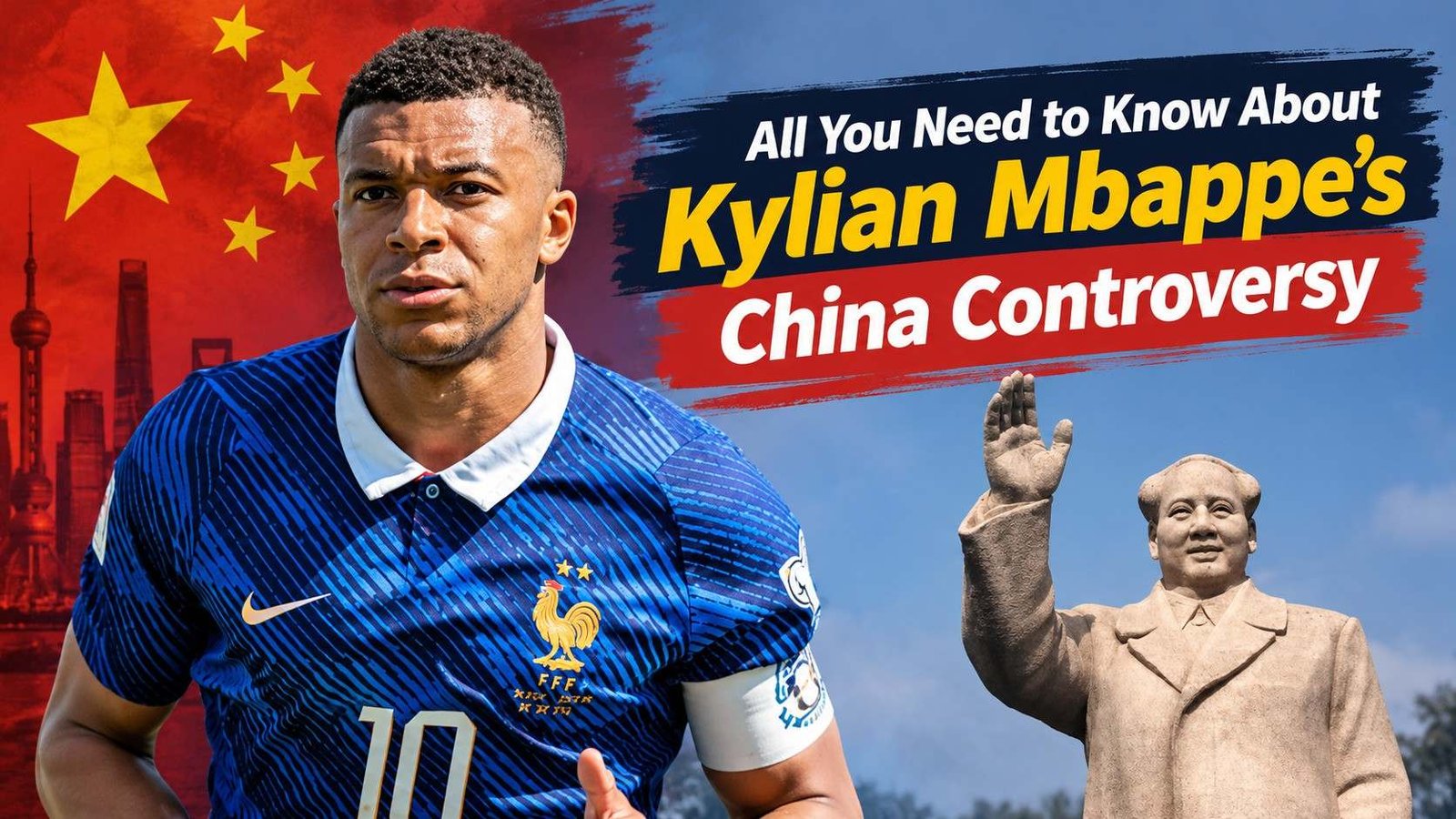
Kylian Mbappe has lost major sponsorship deals in China after a comment about an internet meme caused a major controversy. Reports have also said that China has suspended broadcasts of Spain’s La Liga. The issue now involves Chinese brands, football broadcasters, social media platforms and the Spanish league.
The 27-year-old French footballer has apologised for his comment. He accepted that his words were wrong and hurt people in China. However, his apology has not stopped the backlash. Chinese state media have asked him to support his apology with his actions. La Liga has also apologised to Chinese fans to protect its business relationships in the country.
The incident has raised an important question for global sports: How much damage can a celebrity’s personal comments cause to the clubs, leagues and brands connected to them?
How Did Kylian Mbappe China Controversy Begin?
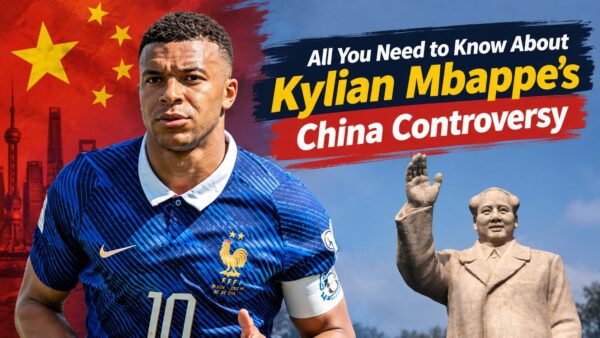
The controversy started after a clip from the French-language programme The Bridge appeared online. In the clip, Kylian Mbappe reportedly talked about internet memes that placed his face over pictures of historical figures.
Mbappe described the funniest meme he had seen as one showing his face on that of “some guy — I think he’s a Chinese dictator.”
The comment appeared to refer to Mao Zedong, the founder of the People’s Republic of China. Someone had used Mao’s image to create a meme featuring Mbappe.
However, Mbappe did not directly name Mao in the reported clip. It could not independently confirm the video’s authenticity. This is an important detail when explaining how the controversy began.
Mao remains a sensitive figure in Chinese history. China still honours him in its official history, but his rule also included campaigns that caused great suffering.
The Great Leap Forward led to a famine that killed tens of millions of people. The Cultural Revolution also caused widespread violence and the persecution of many people.
Because of this history, jokes about Mao can mean more than ordinary internet humour in China. People may see them as disrespectful towards the country’s history, identity and political values.
Chinese football platforms and social media users criticised Mbappe’s reported comments. Some people argued that international celebrities who earn money from China should respect its history and culture.
ALSO READ: Top 10 Greatest Footballers of All Time: Stats, Achievements and Team Impact
Kylian Mbappe Apologises in Three Languages
As the criticism grew, Kylian Mbappe issued an apology on October 27. He shared the statement in French, Chinese and English.
The Real Madrid forward accepted that his comments had hurt Chinese people and Chinese communities around the world.
“My comment was ill-judged, and I now understand that it hurt many people in China and in Chinese communities around the world,” Mbappe said.
He added: “I apologise to everyone my words have upset.”
The footballer also explained that he did not want to offend anyone. He said: “This was absolutely not my intention.”
He ended his apology by showing respect for China and its people.
“I have deep respect for the Chinese people and their history, and I am sincerely sorry.”
Mbappe tried to explain that he had reacted to a meme and had not intended to insult Chinese people. However, the controversy had already spread beyond social media.
According to Al Jazeera’s October 27 report, the controversy had already cost him major sponsorship deals in China before he apologised.
The incident also showed the risks that celebrities face in China. Companies can face public criticism when their brand ambassadors make comments that people consider offensive or disrespectful.
Three Chinese Brands End Their Partnerships With Mbappe
The biggest immediate business impact came from three Chinese companies: Dongpeng Beverage, Mengniu and Milkground. All three announced that they were ending their partnerships with Mbappe.
Dongpeng Beverage
Dongpeng Beverage, a major Chinese drinks company, ended its partnership with Mbappe with immediate effect.
The company stated: “Our company firmly opposes and has a zero-tolerance policy towards any behaviour that offends national sentiments.”
The decision was important because Dongpeng had announced Mbappe as an ambassador for its Bushuila sports drink in April 2026.
During this year’s FIFA World Cup, the company used AI-generated images of the French captain drinking its sports drink in advertising campaigns. Chinese consumers had already seen Mbappe promoting the brand before the controversy began.
After the company announced its decision, the topic “Dongpeng Beverage ends cooperation with Mbappe” became popular on Weibo, China’s social media platform.
An AFP report said the topic received around 430 million views.
This number refers to views, not 430 million different people. Still, it shows how much attention the controversy received online.
Mengniu
Mengniu, one of China’s largest dairy companies, also ended its partnership with Mbappe.
The company said: “Mengniu firmly opposes and has a zero-tolerance policy towards any words or actions that hurt the feelings of the Chinese people.”
This decision put another major commercial relationship at risk for Mbappe. The French forward had already built a strong following among Chinese football fans.
Milkground
Shanghai Milkground Food Tech, a Chinese cheese producer, became the third company reported to have ended its partnership with Kylian Mbappe.
According to Reuters, all three companies announced that they were ending their cooperation with the Real Madrid forward.
Losing these deals could have effects beyond the immediate loss of sponsorship income. Other companies may now think more carefully before choosing Mbappe as their brand ambassador in China.
The incident could affect how businesses view the risks of working with him in this market.
What Happened to On, Dior and His Other Global Partners?
The controversy also raised questions about Mbappe’s partnerships with international brands.
Swiss sportswear company On Holding, which had signed Mbappe as an ambassador, was among the companies mentioned in reports about the incident. Dior also faced questions after reports said that promotional content featuring Mbappe had been removed from Chinese platforms.
However, removing promotional content in China does not mean a company has ended its worldwide partnership with a celebrity. Reports did not confirm that either On or Dior had ended its global partnership with Mbappe.
Reuters reported that On welcomed Mbappe’s apology and expressed respect for China.
Other companies linked to the footballer, including hotel group Accor and toy maker Lego, did not immediately give detailed public comments on the controversy.
There were also claims that On’s shares fell by 3.5% in pre-market trading. However, this figure needs separate financial-market verification before anyone can treat it as a confirmed result of the incident.
The bigger concern is that a controversy in one country can become a problem for an international company. This is especially important when the country is a major market for the business.
However, the available reports do not show that all of Mbappe’s global sponsorship deals have suffered damage.
China Suspends La Liga Broadcasts
The controversy became more serious when reports said that Chinese state television had suspended broadcasts of La Liga matches.
According to an October 28 report by AFP, China Media Group (CMG), which oversees China Central Television (CCTV), announced a suspension of La Liga broadcasts and advertisements featuring Mbappe.
This decision took the controversy beyond Mbappe’s personal sponsorship deals. It also created a problem for Spanish football and its business relationships in China.
La Liga includes major clubs such as Real Madrid and Barcelona. The competition attracts viewers around the world, and Chinese fans are an important part of the international football market.
CMG also reportedly asked Kylian Mbappe, La Liga and Real Madrid to apologise before further discussions could take place.
Mbappe later apologised, and La Liga also issued a statement. However, reports did not clearly explain how much of La Liga’s coverage had been suspended or whether every affected broadcast and digital service had stopped showing matches.
This difference is important. A suspension by CCTV does not automatically mean that every Chinese platform has stopped showing La Liga games. It also does not prove that all existing broadcasting deals have ended.
Even so, the incident has created uncertainty about La Liga’s relationship with Chinese broadcasters and fans.
ALSO READ: Cristiano Ronaldo Provisionally Suspended by Portugal After Walkout Amid Jorge Jesus Rift
La Liga Apologises to Chinese Fans
La Liga quickly responded to the controversy. The Spanish league said that Mbappe’s comments did not represent its views and expressed regret over the offence caused to Chinese fans.
In its official statement, the league said:
“La Liga deeply regrets the offence that Kylian Mbappe’s recent comments have caused among Chinese fans. These comments were made in a personal capacity and do not represent La Liga.”
The league also said that it supported respect, peaceful relations and unity among people from different cultures.
La Liga president Javier Tebas separately apologised. He said the organisation was working with its Chinese partners to resolve the issue.
“We are taking the measures within our reach and working directly with our partners and interlocutors in China to overcome this situation,” Tebas wrote.
He added: “A relationship built over so many years cannot be damaged by a single episode.”
These statements showed why La Liga had to respond quickly. Mbappe made the comments in his personal capacity, but the controversy could still affect the league’s business relationships.
Broadcasters, sponsors and fans may connect a player with the entire competition. As a result, one person’s actions can create problems for a much larger organisation.
How Serious Is the Financial Risk for La Liga?
The controversy has also raised questions about how much money La Liga could lose if its broadcasts remain suspended in China.
Some claims circulating online suggest that La Liga earns around $1 billion from international television rights, with $400 million coming from China.
However, these specific figures could not be independently confirmed through reliable sources. They should not be treated as established financial facts.
La Liga already has an international broadcasting business, and China remains an important market for its digital distribution plans.
The league announced a media partnership with China Mobile’s Migu platform for the 2026-27 to 2029-30 seasons. However, the two sides did not publicly disclose the financial value of this agreement.
The suspension of CCTV broadcasts could create a serious business problem for La Liga. But it does not prove that the league has lost its entire Chinese audience or all its broadcasting income from the country.
The final financial impact will depend on several factors. These include how long the suspension lasts, what the existing agreements say and whether other platforms continue to show matches.
For now, the main confirmed concern is the disruption to broadcasts and the need to repair business relationships. There is no verified evidence that La Liga has lost hundreds of millions of dollars because of this incident.
ALSO READ: Real Madrid vs La Liga: Javier Tebas Faces Fresh Pressure After Explosive Goebbels Remark
China’s Government and State Media Respond
The controversy also reached China’s Foreign Ministry.
Spokesperson Guo Jiakun said: “Words and actions that hurt the feelings of the Chinese people will naturally be met with joint opposition from all sectors of Chinese society.”
Chinese state media also criticised international celebrities who earn money from the country but fail to respect its cultural sensitivities.
China Daily described the incident as a reminder that celebrities have limits to their influence. The state-backed Global Times also argued that people who want to earn money from the Chinese market must show respect.
A representative associated with China Media Group said the organisation would consider Mbappe’s apology along with his future actions.
In other words, an apology alone might not be enough to restore trust immediately.
The controversy also affected Mbappe’s social media presence in China. AFP reported on October 28 that restrictions had been placed on his accounts on Chinese platforms Weibo and Xiaohongshu. These restrictions limited his ability to gain new followers.
This showed that the backlash had spread beyond sponsorship deals. It had also affected his ability to reach Chinese users through social media.
Could the Controversy Affect Mbappe’s Long-Term Reputation?
Kylian Mbappe remains one of the most famous footballers in the world. However, his commercial value also depends on whether brands believe he can connect with their target audiences.
The loss of three Chinese partnerships is a direct business consequence of the controversy. The wider impact on his career and other sponsorship deals remains uncertain.
Companies may now review how they manage partnerships with celebrities who work across different countries. A comment that seems harmless in one place can cause serious problems in another because of differences in history, culture and politics.
Mbappe may need to do more than issue a single apology to rebuild trust with Chinese fans and businesses.
The incident has also shown how a player’s personal comments can affect organisations beyond his own career.
La Liga had to defend its position, its president apologised, and broadcasters faced pressure over the availability of Spanish football. Sponsors also had to consider how consumers might react if they continued working with Kylian Mbappe.
This is not the first time a sports figure has faced business consequences in China.
In 2019, Daryl Morey, who was then the general manager of the Houston Rockets in the NBA, posted a tweet supporting protests in Hong Kong. The tweet led to a major dispute between the NBA and China. Chinese television stopped showing NBA games for a period.
The two incidents are different, but both show how quickly a comment or social media post can grow into a much larger business problem for the sports industry.
What Happens Next?
Kylian Mbappe has apologised, and La Liga has expressed regret to Chinese fans. However, the controversy remains serious because it has already affected sponsors, broadcasters and social media platforms.
The next steps will depend on whether Chinese companies reconsider their partnerships, whether La Liga broadcasts return to normal, and whether Mbappe’s apology helps rebuild trust.
La Liga faces the separate challenge of protecting its long-standing relationships with Chinese partners. Kylian Mbappe must now limit the damage to his commercial reputation and show respect through his future actions.
In the end, the incident shows how a comment about an internet meme can become an international sports business issue when it touches on a country’s history and cultural sensitivities.
Mbappe’s apology may help reduce the tension, but the controversy has already shown that a celebrity’s words can affect far more than the person who makes them.
Keep following Sportschilly for the latest updates.